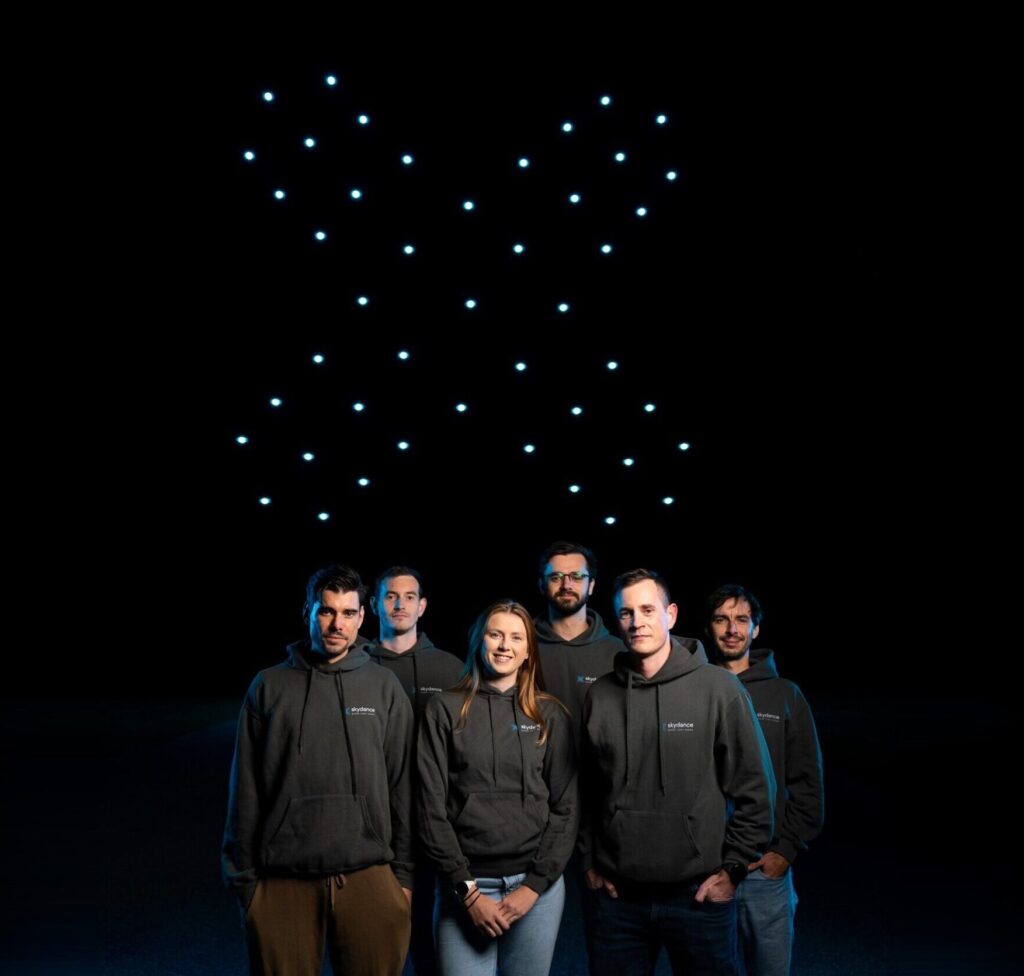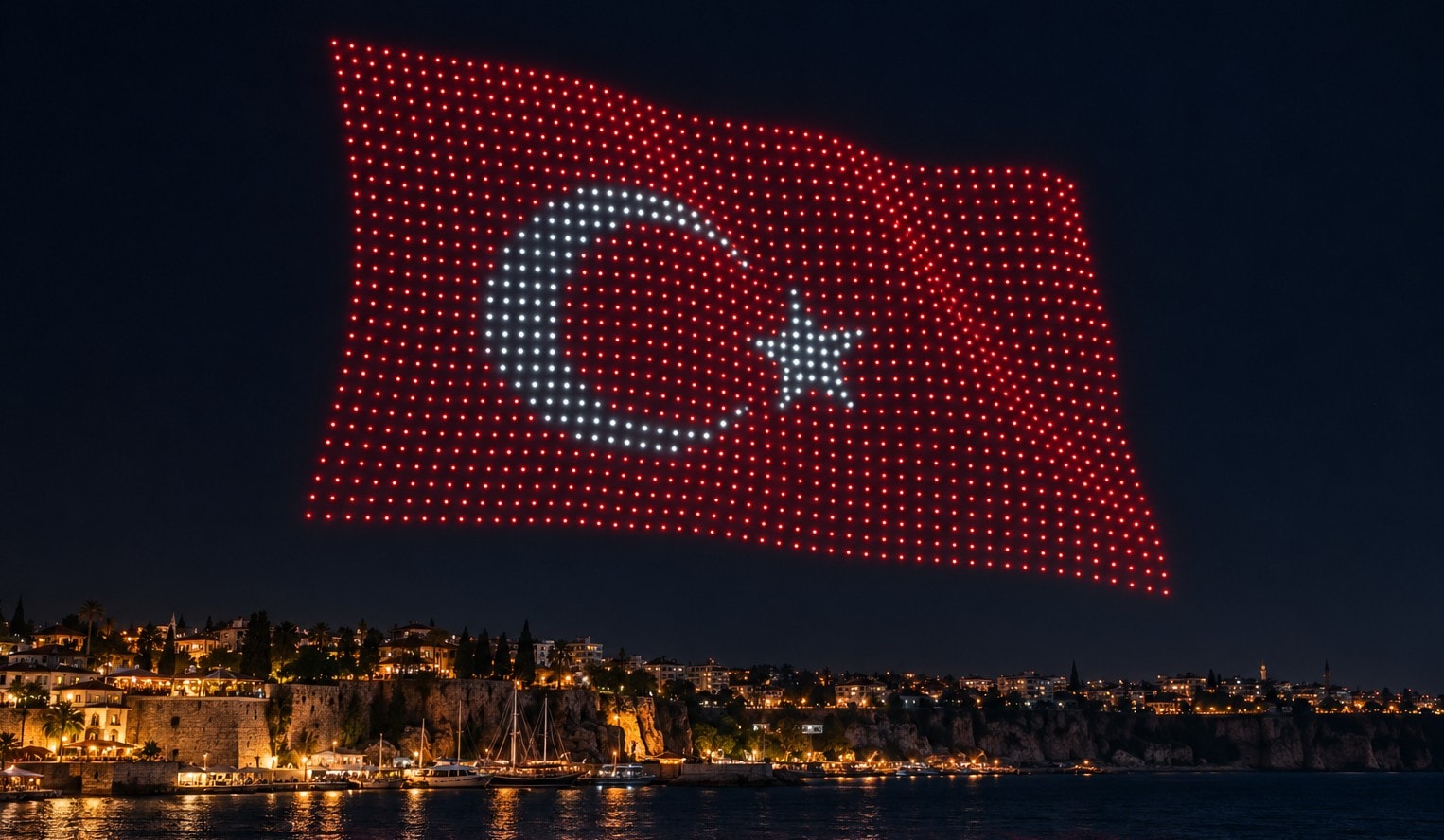
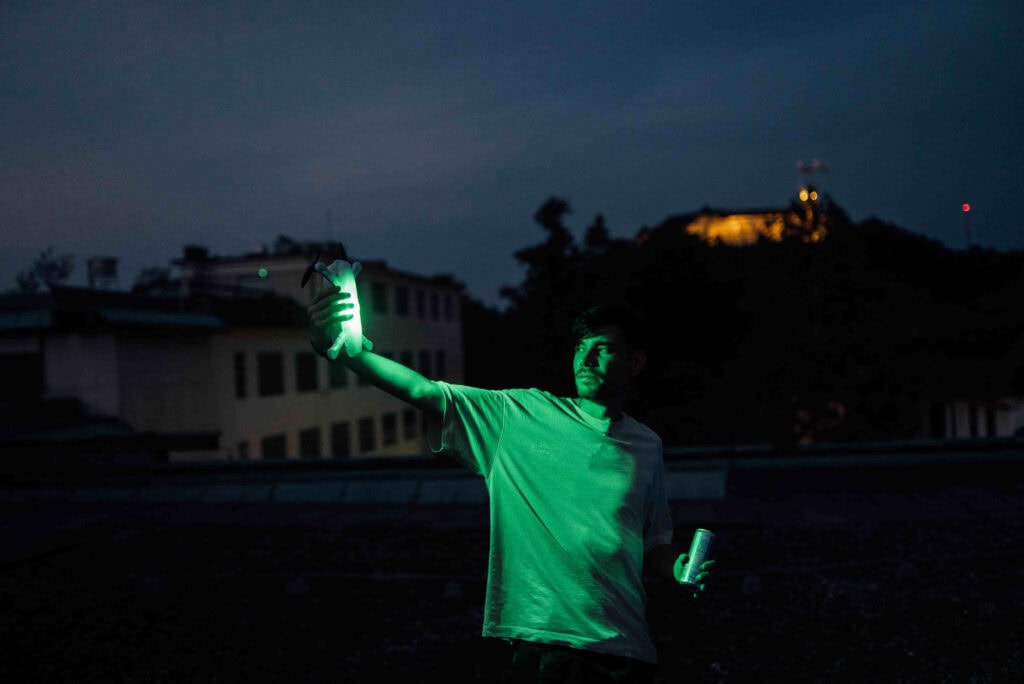
A drone light show is a fleet of small drones, each carrying a bright RGBW LED, that fly pre-programmed 3D paths in perfect sync. At Skydance, every show is flown with the Drotek IO Star 3, a purpose-built light show drone. RTK satellite positioning keeps each drone within about 1 cm of where it should be, and a Ground Control Station talks to the whole fleet over two independent radio links. Every drone also carries an independent “geoguard” that stops it if it ever leaves the approved flight area. This setup meets the European EASA safety standard for drone shows (MOC Light-UAS.2511). Skydance designs every show in 3D, gets the aviation permits, and flies it for events across Slovenia, Croatia and the wider region.
What the crowd sees, and what happens behind it
The lights go down. A few hundred points of light rise in silence, hang above the crowd for a heartbeat, then fold into a logo, a heart or a city skyline. The shape turns slowly in 3D, changes colour on the beat of the music, and dissolves into the next scene. People reach for their phones.
From the ground it looks like magic. In reality, it is a carefully engineered piece of aviation. Every drone knows exactly where to be at every moment of the show. A ground station streams satellite corrections to the whole fleet throughout the flight. Several independent safety systems watch every aircraft for the whole flight.
At Skydance we became the first authorised drone show operator in Slovenia in 2025. Since then we have flown shows for clients such as the Municipality of Bled and Lisca, and up to 500 drones at Oktobeerfest in Zagreb. In this article we open the flight case and show you the technology that makes it all possible, without drowning you in engineering jargon.
The drone: why we fly the Drotek IO Star 3
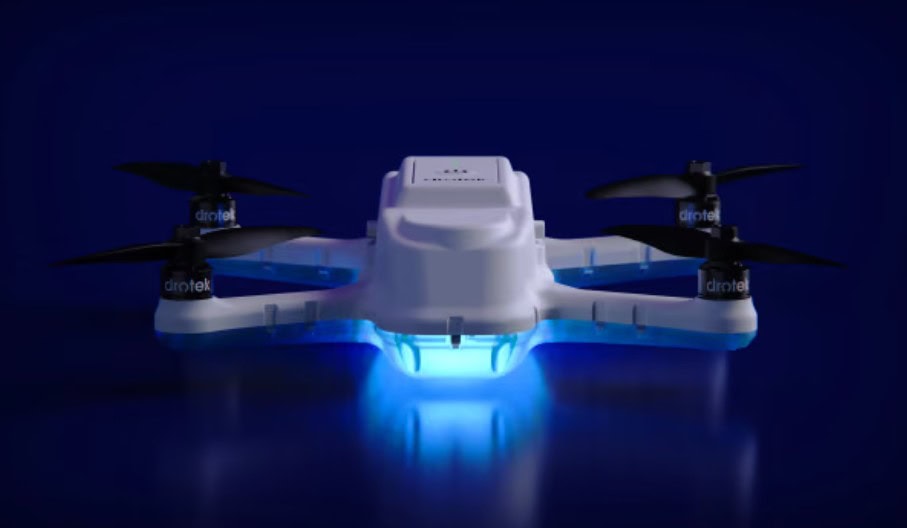
Every Skydance show is flown with the European best-quality drone show drone IO Star 3, made by the French company Drotek. It was designed from the ground up for one job: flying in large swarms and painting the night sky.
It is small and light. Without propellers it measures about 21 x 21 cm and weighs 320 g with its battery, roughly the weight of a can of soda. Light drones are safer for the public and easier to move by the hundreds.
Weight with battery | 320 g |
Flight time | Up to 25 minutes in good conditions |
Typical show speed | up to 6 m/s |
Light | Powerful RGBW LED (red, green, blue and pure white) |
Positioning | GNSS RTK, accurate to about 1 cm |
Radio links | Wi-Fi 5 GHz (main) and XBee 2.4 GHz (secondary) |
Operating temperature | -20°C to 40 °C |
A 25-minute battery gives plenty of headroom for a typical Skydance show of around 8 minutes, including take-off, landing and a safety reserve.
The drones never “talk” to each other or improvise. Each one follows its own pre-calculated path, called its dance in the flight software. Because every path is planned and checked in advance, collisions are designed out before the drones ever leave the ground.
The light: every drone is a pixel in the sky
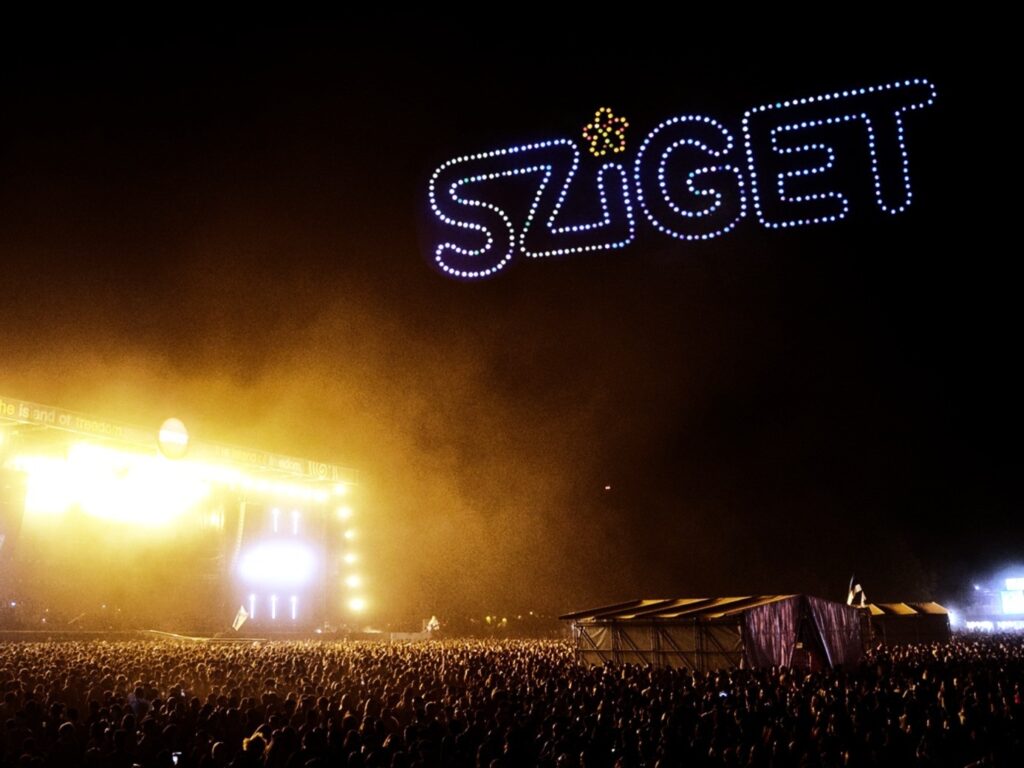
Think of a drone show as a giant 3D screen, where every drone is one pixel. The more pixels, the sharper the picture: 100 drones can draw a clean logo, 500 can draw a detailed animation that moves and morphs.
Each IO Star 3 carries one powerful RGBW LED under a transparent bottom shell. RGB mixes red, green and blue into millions of colours. The extra W is a dedicated white LED, so whites look crisp and clean instead of slightly tinted. Colours and brightness are programmed frame by frame, so the sky can pulse, fade and flash in time with the music.
The LED is bright enough to get hot at full power, so it has its own overheat protection: it switches off at 90 °C and comes back on once it cools. Our designers plan colours with this in mind, using white for long, bright scenes and saving full-power colour for the big moments.
Skydance is also developing its own add-on for more dynamic colour effects, so our shows can go beyond the standard patterns.
Precision: how drones hold position to about 1 cm
The GPS in your phone is usually accurate to a few metres. That is fine for finding a restaurant, but useless for a drone show. If every drone were off by a couple of metres, a logo would turn into a blurry cloud, and drones could drift into each other.
That is why every IO Star 3 uses GNSS RTK (Real-Time Kinematic) positioning. It works in three steps:
- A fixed GNSS antenna on the ground, our RTK base station, listens to the same satellites as the drones.
- Because the base station knows it is not moving, it can calculate the errors in the satellite signals caused by the atmosphere.
- It sends these corrections to every drone over the radio link, and each drone uses them to correct its own position.
The result is a “Fix” position, accurate to about 1 centimetre. Before any take-off, our pilots check on the ground station that every single drone has reached this Fix status.
RTK needs a clear view of the sky. Tall buildings, dense trees and heavy cloud can slow it down, which is one reason we visit every venue before the show and choose the take-off area carefully.
Mission control: the ground station and its private network
The drones get all the applause, but the show is really run from a compact ground station set up near the take-off area. This is our Ground Control Station (GCS), the setup our pilots use to power on, check, launch and watch the entire fleet.
We build our own private, closed network at every show. It never depends on the venue’s Wi-Fi or the mobile network. It has five main parts:
- GCS computer. The heart of the system. It runs the fleet software, works as the RTK base station and sends commands to every drone.
- Router and PoE switch. Professional Ubiquiti UniFi networking that connects everything and powers devices over a single Ethernet cable.
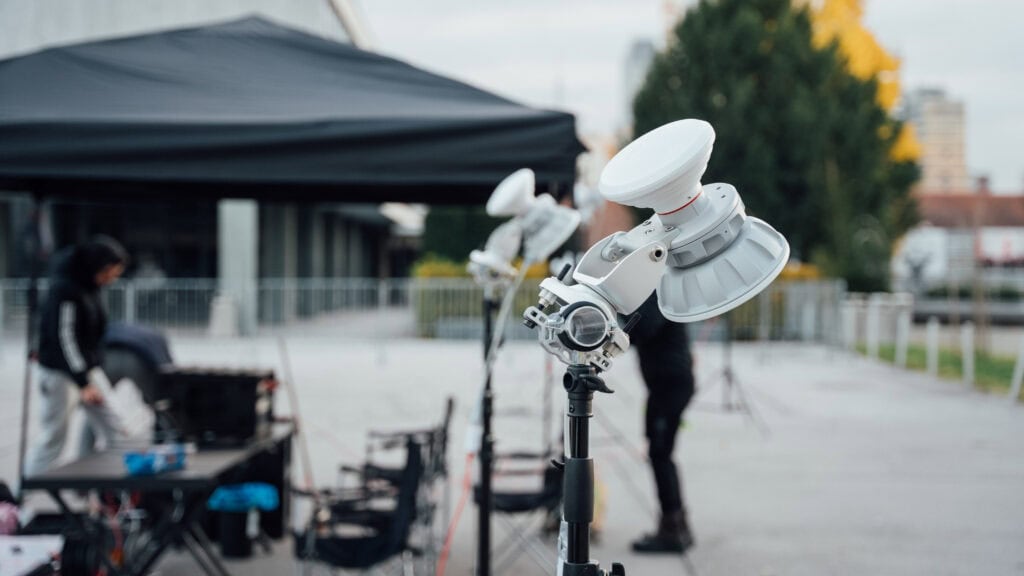
- Wi-Fi access points with directional horn antennas. MikroTik radios with RF Elements horn antennas beam a strong 5 GHz signal straight at the show area and ignore noise from other directions.
- XBee backup radio. A second, independent 2.4 GHz link with a range of up to 1 km that carries the most important messages: satellite corrections and emergency commands.
- Backup power. A UPS keeps the ground station running even if the venue’s power fails mid-show.
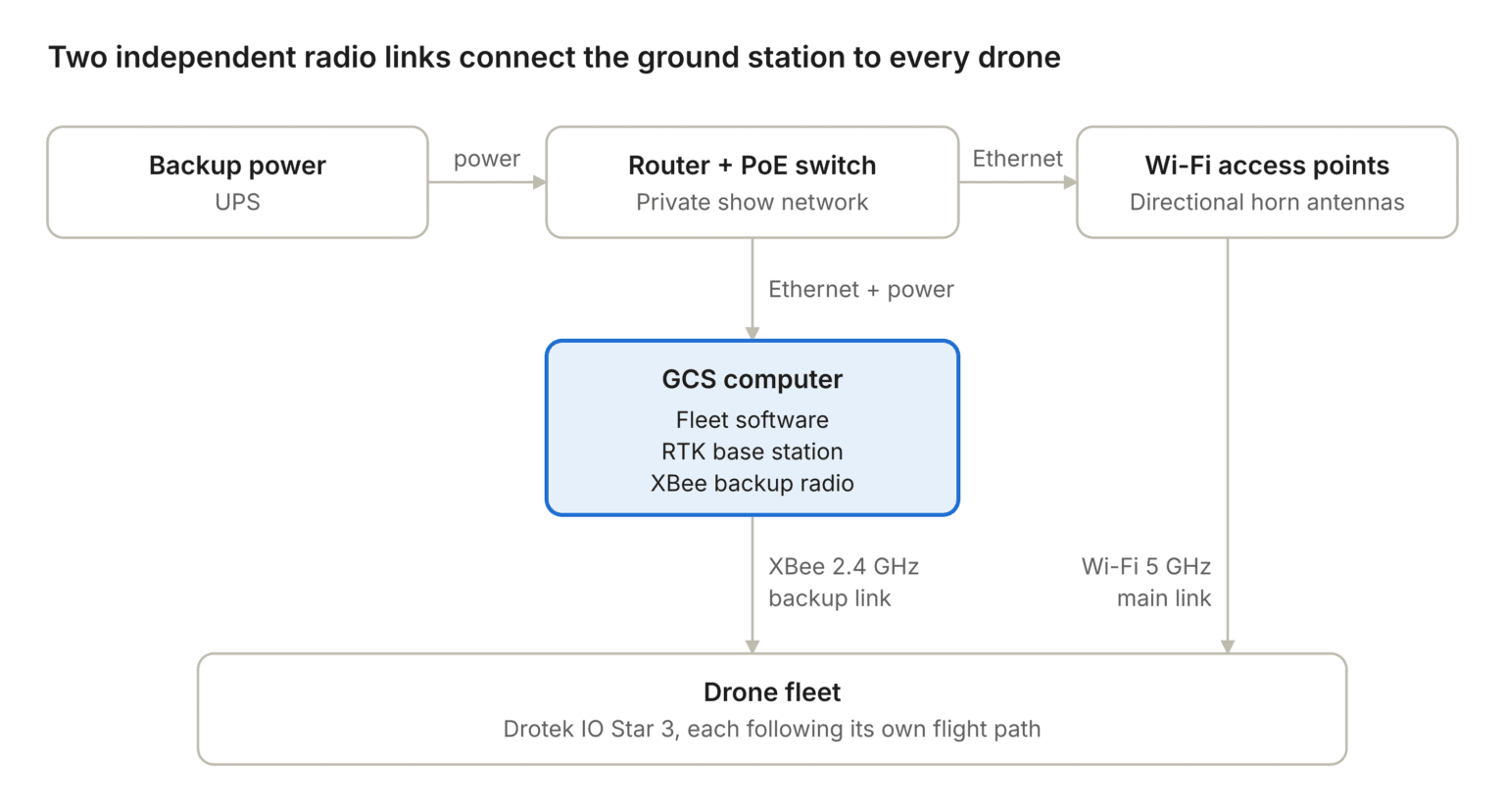
Skydance ground station network · two radio links to the fleet
The GCS computer reaches the drones two ways: over Wi-Fi through the access points, and directly over its own XBee radio.
Why two radio links? Concerts and city centres are full of radio noise from phones, broadcast antennas and stage equipment. The main Wi-Fi link carries the heavy traffic, like telemetry and battery data from every drone. If it drops, the XBee link keeps the satellite corrections and the emergency commands flowing, so the drones keep flying safely.
From idea to sky: how a show is designed
The hardware is only half the story. Every Skydance show starts as a story, not a drone count.
- Concept and script. We agree with the client what the audience should feel and remember: a brand reveal, a city’s history, a wedding proposal.
- Music and voiceover. The soundtrack sets the rhythm. Every scene is timed to it.
- 3D animation in Blender. Our designer builds each formation and the transitions between them in Blender, the open-source 3D tool used by animation studios worldwide.
- Render for the client. Before anything flies, the client sees a video render of the show and can request changes.
- Flight-path conversion. Specialised software turns the animation into one trajectory per drone, with exact positions, colours and timings.
- Safety checks. Every path is checked against the drone’s limits for speed and acceleration, the minimum spacing between drones, and the approved flight area.
A typical show takes about one month from first idea to performance. When an event is close, we can deliver in around two weeks.
Safety: layer upon layer of protection
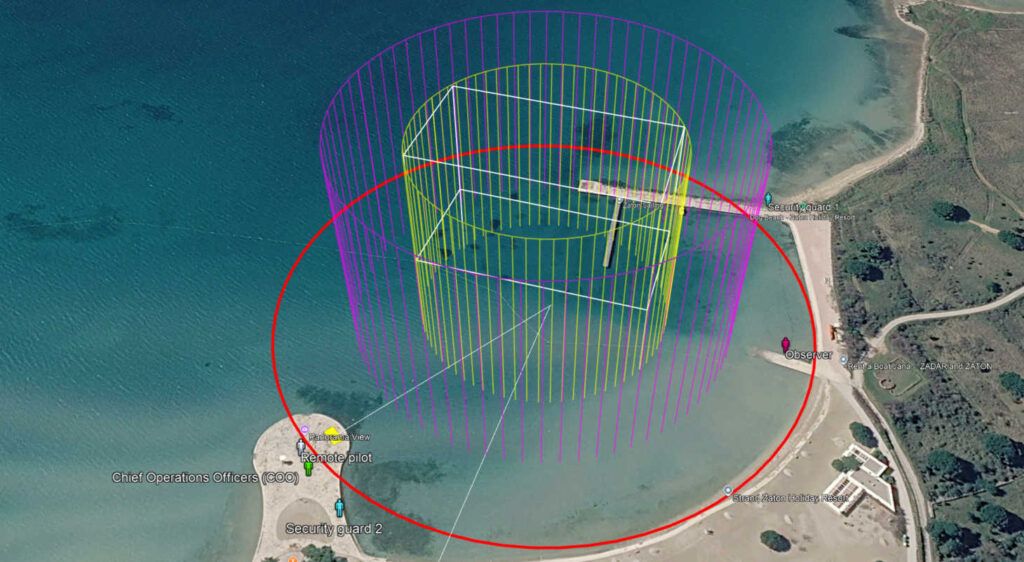
A drone show is an aviation operation, and we treat it that way. In Europe, swarm flights are not allowed under the standard drone rules. Every show needs a risk assessment (SORA) and an authorisation from the national aviation authority. The IO Star 3 system meets EASA’s demanding standard for drone show containment, MOC Light-UAS.2511, and Skydance holds the permits, pilot licences and insurance to fly it.
Here are the main safety layers built into every drone:
- Geoguard, an invisible fence in the sky. Each drone carries a second, independent computer with its own satellite receiver and barometer. It knows the approved flight area. If a drone ever flies outside it, climbs too high or moves too fast, the geoguard cuts its motors, independently of the main autopilot.
- Three independent ways to stop a drone. The pilot can stop any drone, or the whole fleet, from the ground station. The stop signal can reach the motors through the main flight computer, through the speed controllers, or by cutting the power supply. Two of these paths bypass the flight computer entirely.
- Smart batteries. Each battery reports its charge to the ground station. Below 12% a drone flies itself back to its take-off spot. Below 6% it lands where it is.
- Automatic return home. If a drone drifts more than 2 m from its planned path for more than 3 seconds, or stops receiving satellite corrections, it leaves the show and returns home at a safe height.
- Backup sensors. Gyroscopes, accelerometers, magnetometers and barometers have redundant twins, so one failed sensor does not bring a drone down.
On the ground, we add the human layer. We visit the venue in advance, calculate a safety zone around the flight area that the public cannot enter, and brief the whole crew before take-off. Before every show the pilot also runs a mandatory test of each drone’s geoguard: motors spin up, the kill command is sent, and every motor must stop. No pass, no take-off.
Weather: wind, rain and cold
Weather is the one thing no drone show company can control, so we plan around it carefully.
- Wind is always stronger at show height than on the ground. Technically the IO Star 3 can handle gusts of around 40 km/h, but that is close to its limits. Before each show we fly a few drones to measure the wind at show height and compare it with weather data and ground measurements.
- Rain and fog. The drones should not fly in heavy rain, snow or fog. Light moisture is manageable, and our drones travel and take off from rain- and dust-proof platforms.
- Batteries lose capacity in the cold. For winter shows, such as New Year’s Eve, we keep drones and batteries warm until the last moment and plan a bigger time reserve. We never fly in icing conditions.
If the forecast looks risky, we agree a clear go or no-go decision process with the client well before show night, including a backup time slot where possible.
Show night, step by step
Here is what our crew does on the day, long before the first drone lifts off:
- Set up the ground station. The network, antennas and RTK base station go up, and the base station locks onto the satellites.
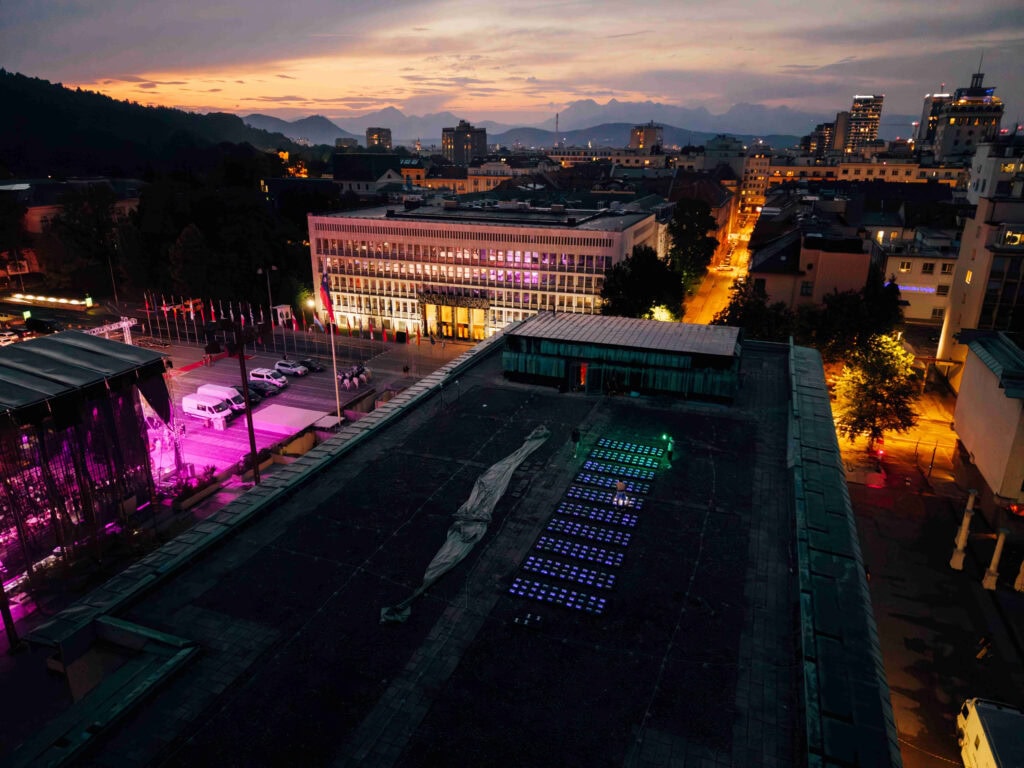
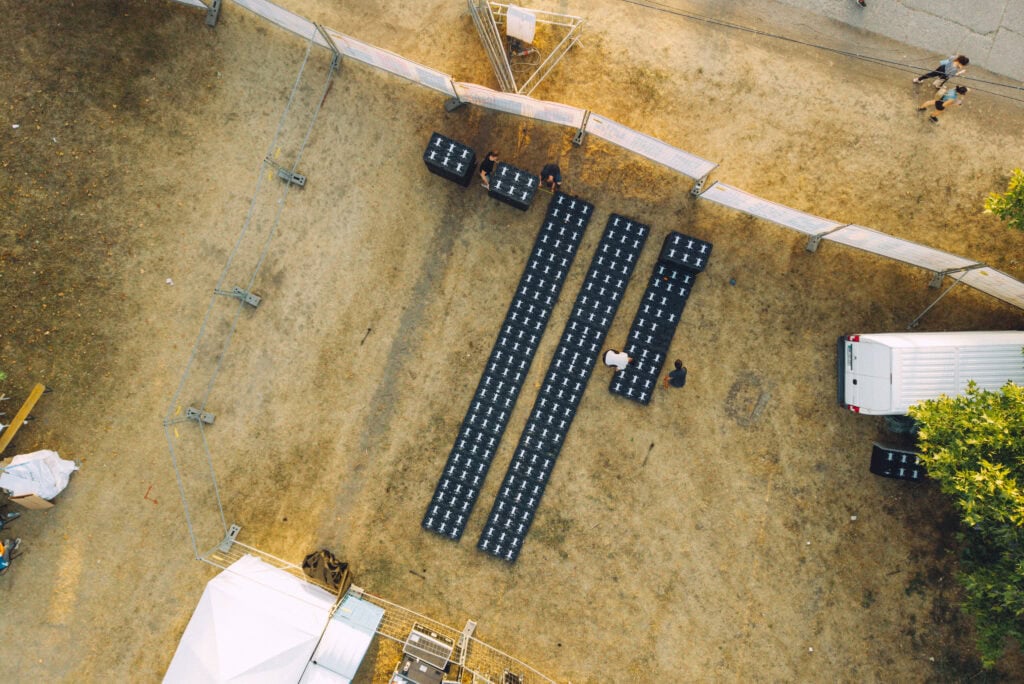
- Lay out the fleet. Drones arrive in stackable all-in-one platforms that hold six drones each and double as take-off pads, so hundreds of drones can be placed in a precise grid quickly.
- Power on remotely. The pilot wakes the whole fleet from the ground station with one command.
- Pre-flight checks. For every drone: battery level, radio quality, firmware, sensors, LEDs and RTK Fix.
- Motor and geoguard test. Motors spin up, the emergency stop is triggered, and every drone must pass.
- Upload the show. Each drone receives its own flight path, plus the start time and the approved flight area.
- Crew briefing. Roles, radio calls and emergency procedures are confirmed.
- On the cue, the fleet takes off and flies the show automatically while the pilots and observers watch every drone in real time.
- Landing and debrief. Drones return to their pads, flight logs are saved and the crew reviews the flight.
Frequently asked questions
Which drones does Skydance use for drone light shows?
Skydance flies the Drotek IO Star 3, a professional drone built specifically for light shows. It weighs 321 g, carries a powerful RGBW LED, and uses RTK positioning accurate to about 1 cm.
How do drone shows work?
Designers animate the show in 3D software, and the animation is converted into a separate flight path for each drone. On show night, a ground control station launches the fleet, and every drone follows its path automatically while RTK satellite positioning keeps it exactly on track.
Are the drones controlled by pilots one by one?
No. The drones fly their pre-programmed paths automatically. Certified pilots supervise the whole fleet from the ground station and can land, recall or stop any drone at any time.
How accurate are drone show drones?
With RTK correction from a ground base station, each IO Star 3 knows its position to about 1 cm. Ordinary GPS is only accurate to a few metres.
What happens if a drone loses connection?
Each drone has two independent radio links. If the main Wi-Fi link drops, the backup XBee radio keeps sending satellite corrections and emergency commands. If a drone stops receiving corrections, it automatically flies back to its take-off spot.
Are drone shows safe?
Yes, when flown by an authorised operator. Our drones carry an independent geoguard that stops a drone if it leaves the approved flight area, and the system meets EASA’s MOC Light-UAS.2511 standard. Every show also needs a risk assessment, a permit from the aviation authority and a safety zone around the flight area.
Can drone shows fly in wind or rain?
Light wind is fine. The IO Star 3 can technically handle gusts of around 10 m/s, but we always plan with a safety margin and measure the wind at show height first. We do not fly in heavy rain, snow, fog, thunderstorms or icing conditions.
How long does a drone show last?
A typical Skydance show lasts around 8 minutes. Each drone can fly for up to 25 minutes in good conditions, which leaves a comfortable reserve.
How many drones do I need for my event?
Around 100 drones can draw clean logos and simple shapes. From 300 to 500 drones, you get detailed animations and smooth 3D transitions. Our largest show so far used 500 drones at Oktobeerfest in Zagreb.
Is a drone show a good alternative to fireworks?
Yes. Drone shows are quiet, produce no smoke or debris, are reusable, and can draw logos, text and stories that fireworks cannot. They are a popular choice for cities, festivals and venues near wildlife, livestock or pets.
Bring your story to the sky
Behind every few minutes of magic there are weeks of design, careful engineering and strict safety work. That is the part our audiences never see, and the reason our shows run smoothly.
Planning a city celebration, festival, product launch, wedding or New Year’s Eve show in Slovenia, Croatia or anywhere in Europe? Request a free quote at skydance.si, or read more stories on the Skydance blogs.
Sources and further reading