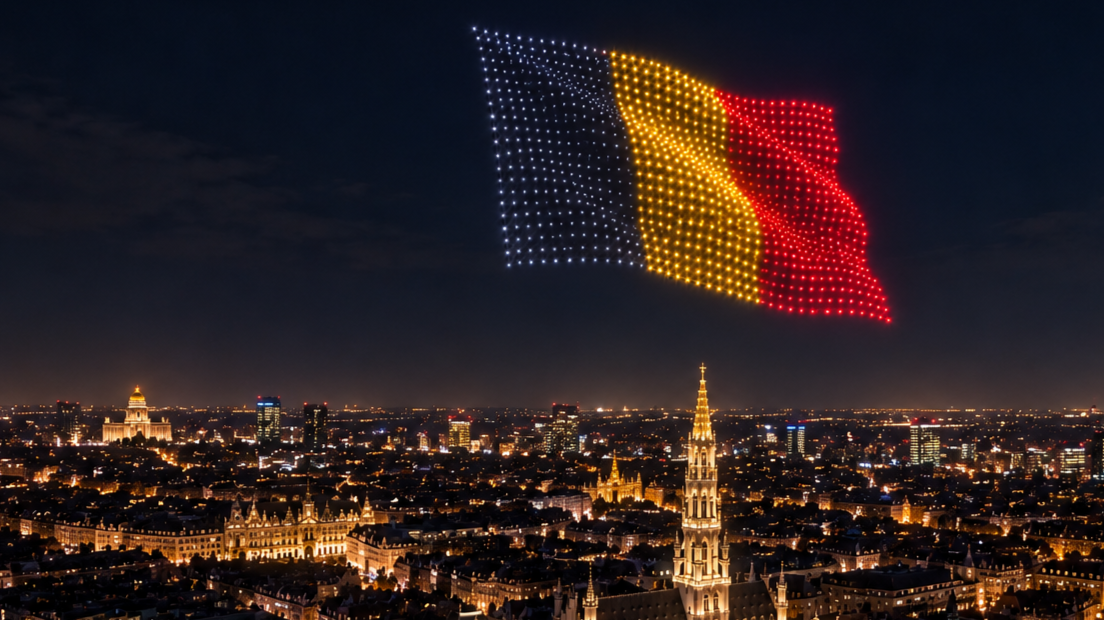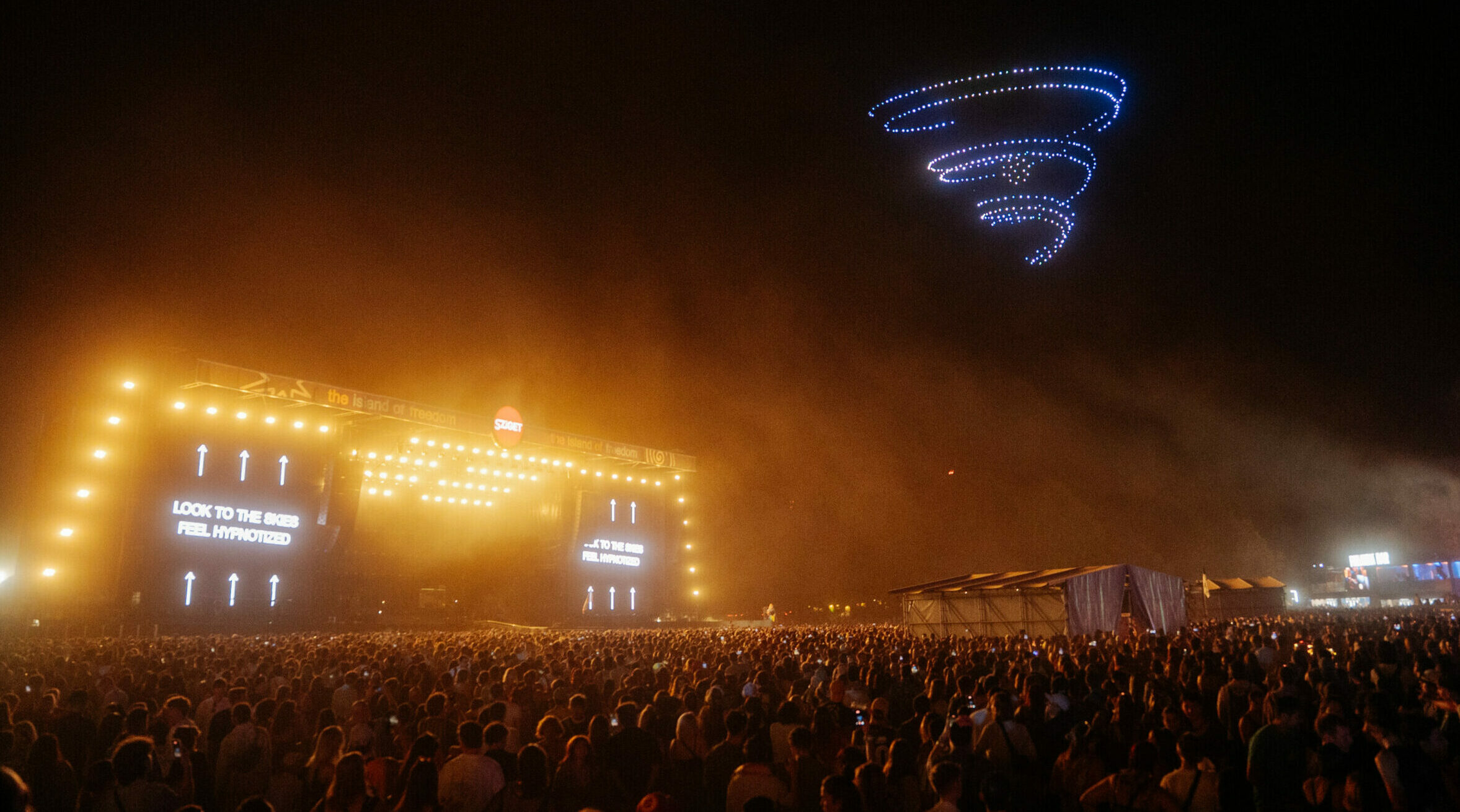
From the outside, a drone show looks simple: lights appear, shapes form, people cheer, and the whole thing ends up on social media within minutes.
But what people don’t see is everything behind it — regulation requirements, creative work, aviation-level planning, and a lot of technical preparation. If you’ve ever wondered what it really takes to create a drone show (or you’re thinking about booking one), here’s the full process, explained in a way that actually makes sense.
REGULATION
Let’s start with the least exciting part: regulation.
A drone show is a swarm operation, and under EU EASA rules it falls under the Special Category. In other words: you can’t simply buy the equipment, learn the basics, and start flying shows in public.
To operate legally, you need operational authorization and you must prove to the aviation authority that:
- your team is trained and competent,
- your procedures are safe and repeatable,
- your system is validated and reliable,
- and your documentation is complete.
It’s a serious process, and it takes time. But once your authorization is in place, things get smoother — also when working abroad. For example within the EU, cross-border operations can be much easier to handle once you already have authorization in your country.
TEAM
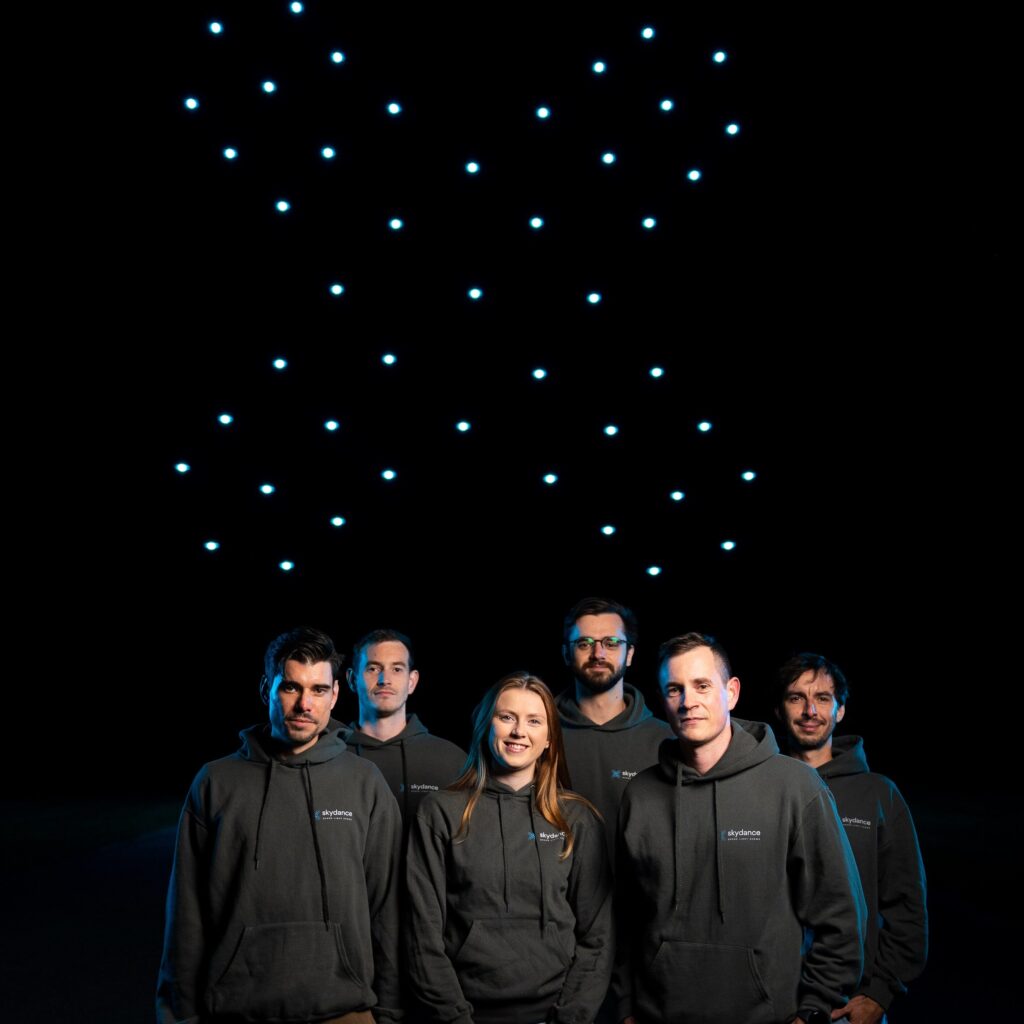
A drone show isn’t “a pilot and some drones.” It’s a coordinated production with clear roles, and every role matters.
To deliver a show safely and reliably, you need a trained team that covers everything from design to execution, including:
- Operational manager (responsible for planning, safety, and procedures)
- Licensed pilot (in charge of drones and equipment)
- Technicians (setup, batteries, platforms, antennas, troubleshooting)
- Observers / spotters (monitoring the safety area and airspace)
- Security staff (when there’s a chance people could enter the show area — roads, paths, open public spaces)
SOFTWARE
This is where the magic really starts.
In practice you need two types of software:
- Choreography / design software (to create formations, transitions, colors, timing)
- Ground Control Station (GCS) software (to command and monitor the fleet during setup and flight)
For choreography, there are several approaches on the market. Some teams use Blender with add-ons; others use dedicated software like SPH or similar systems. The first show takes a lot of training and patience —but once you learn it, it becomes the fun part, because creativity really has no limits here.
Once the choreography is done, you export it in the format your drone system supports and store the files for later deployment (once your drones and site setup are ready).
THE DRONES
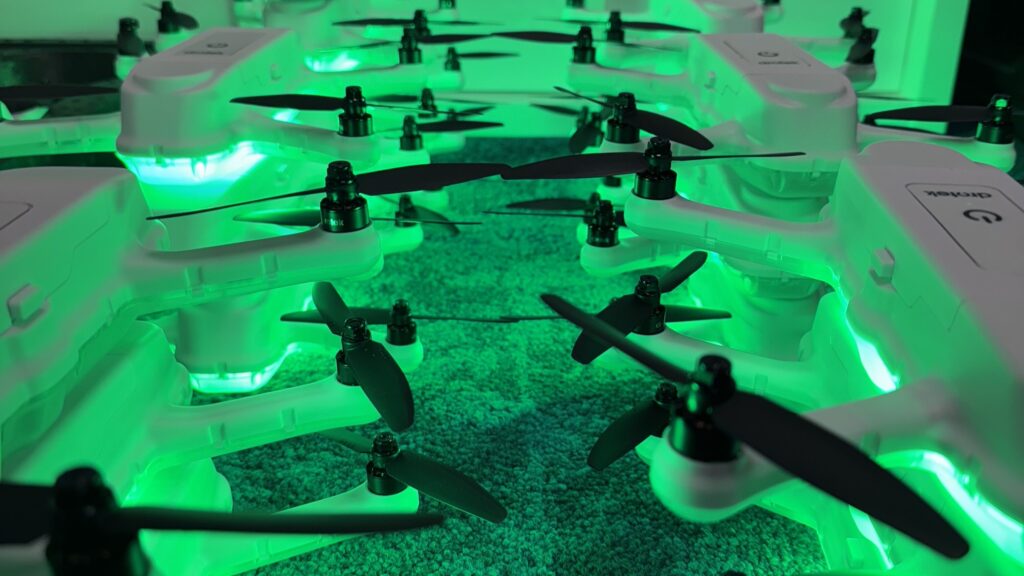
The main component of any drone show is, of course, the drones — but these are not ordinary drones with an LED taped onto them. Drone show drones are purpose-built. They’re typically:
- compact and easy to deploy at scale
- equipped with powerful LEDs designed for visibility
- built for accurate positioning and stable formations
- fitted with reliable fail-safes designed for swarm operations
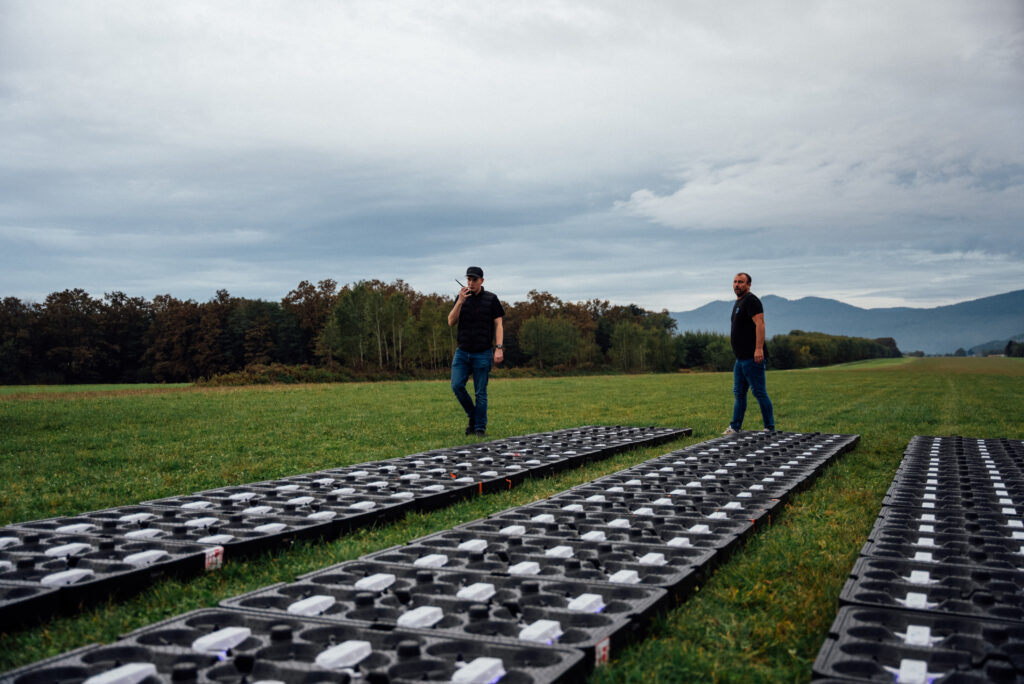
Most modern systems also use platform-based setups, where drones take off and land from dedicated platforms. These platforms speed up deployment and reduce the ground space needed.
EQUIPMENT
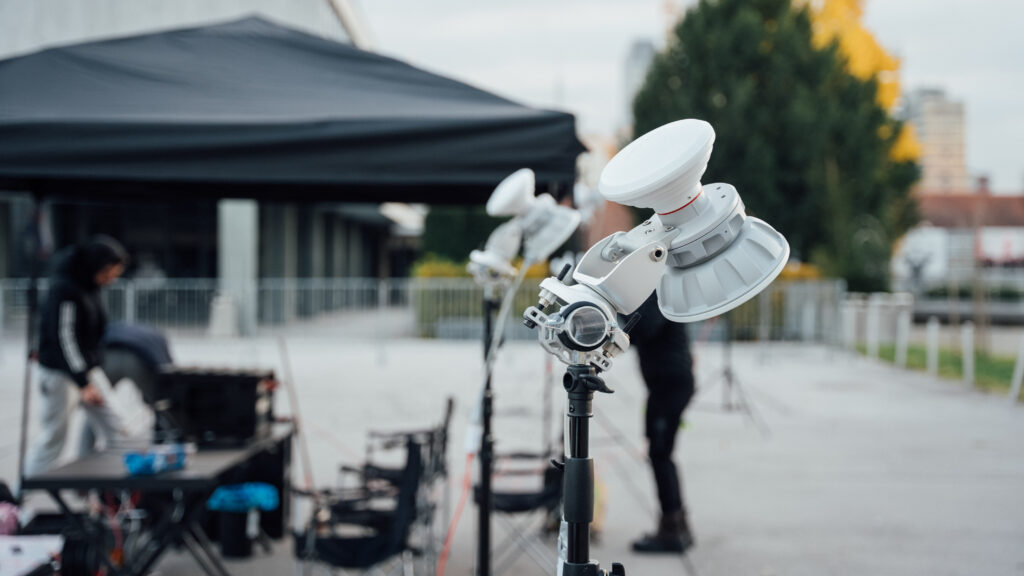
As much as the drones get all the attention, a drone show requires an entire technical ecosystem to control and support them.
Beyond the drones themselves, you typically need:
- RTK GPS system (for high-accuracy positioning)
- server/network system to build a local intranet for the operation
- Wi-Fi or other antennas for stable communication between drones and the control station
- Ground Control Station (GCS) — essentially the brain of the operation
And then all the practical necessities:
- tripods for antennas/GPS
- at least two laptops
- power supply solutions
- transport cases, tools, spare parts
- compass, meter, and other field accessories
so, what's the process?
Here’s what the whole process typically looks like for Skydance from the first conversation to show night:
1) Discovery and planning
First, we sit down with the customer and understand:
- why they want a drone show
- where it will happen
- what kind of message or moment they want to create
- and what the event setup looks like (schedule, crowd, venue constraints)
2) Feasibility check
Before we design anything, the team checks:
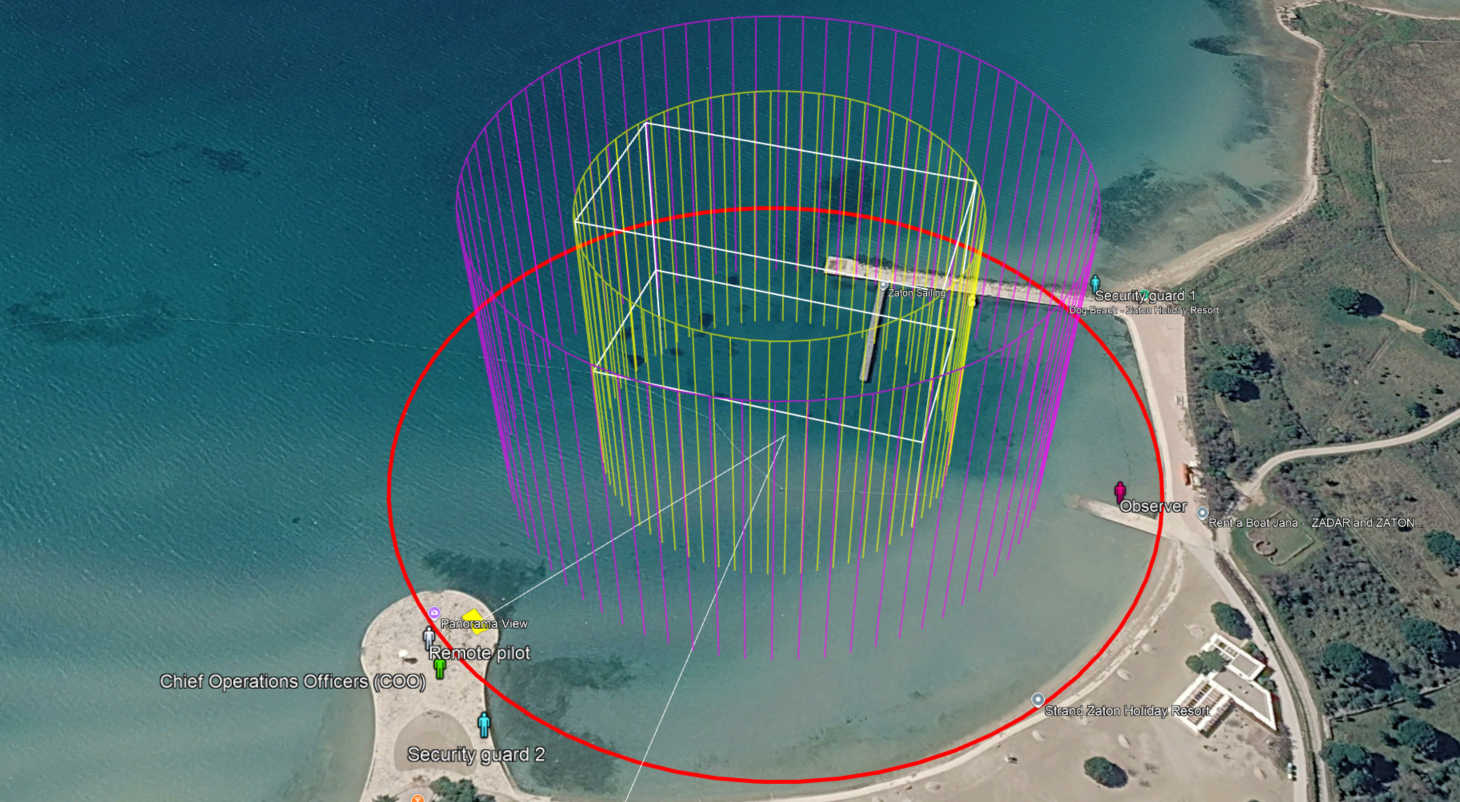
- execution restrictions at the location (terrain, obstacles, audience layout)
- airspace and regulatory limitations
- any other operational constraints that could affect the show
If it’s feasible, we move forward.
3) Storyboard and concept
Next comes the creative stage: we work with the customer on a storyboard.
This is the bridge between “ideas” and a choreography that actually feels purposeful. Once we have a concept defined, then we can move to creating actual choreography in the choreography design software.
4) Choreography creation
This is the most labor-intensive part. Designer will need to:
- create shapes that look clean with the available number of drones,
- designing smooth transitions,
- adding color effects that feel dynamic and emotional,
- adjust timing based on the background music or voice over and
- perform in-app feasibility checks.
It’s hours of detail work — and it’s what separates a “cool tech demo” from a show people remember.
5) Testing and validation
Once the choreography is ready, we test it at our testing location.
This stage is where we validate performance and catch issues early — before we’re in front of an audience.
6) Regulatory preparation
In parallel, the regulatory side is handled properly:
- Concept of Operations (ConOps),
- coordination with local stakeholders/authorities,
- required notifications and documentation and
- risk assessment and safety planning.
7) Show day setup
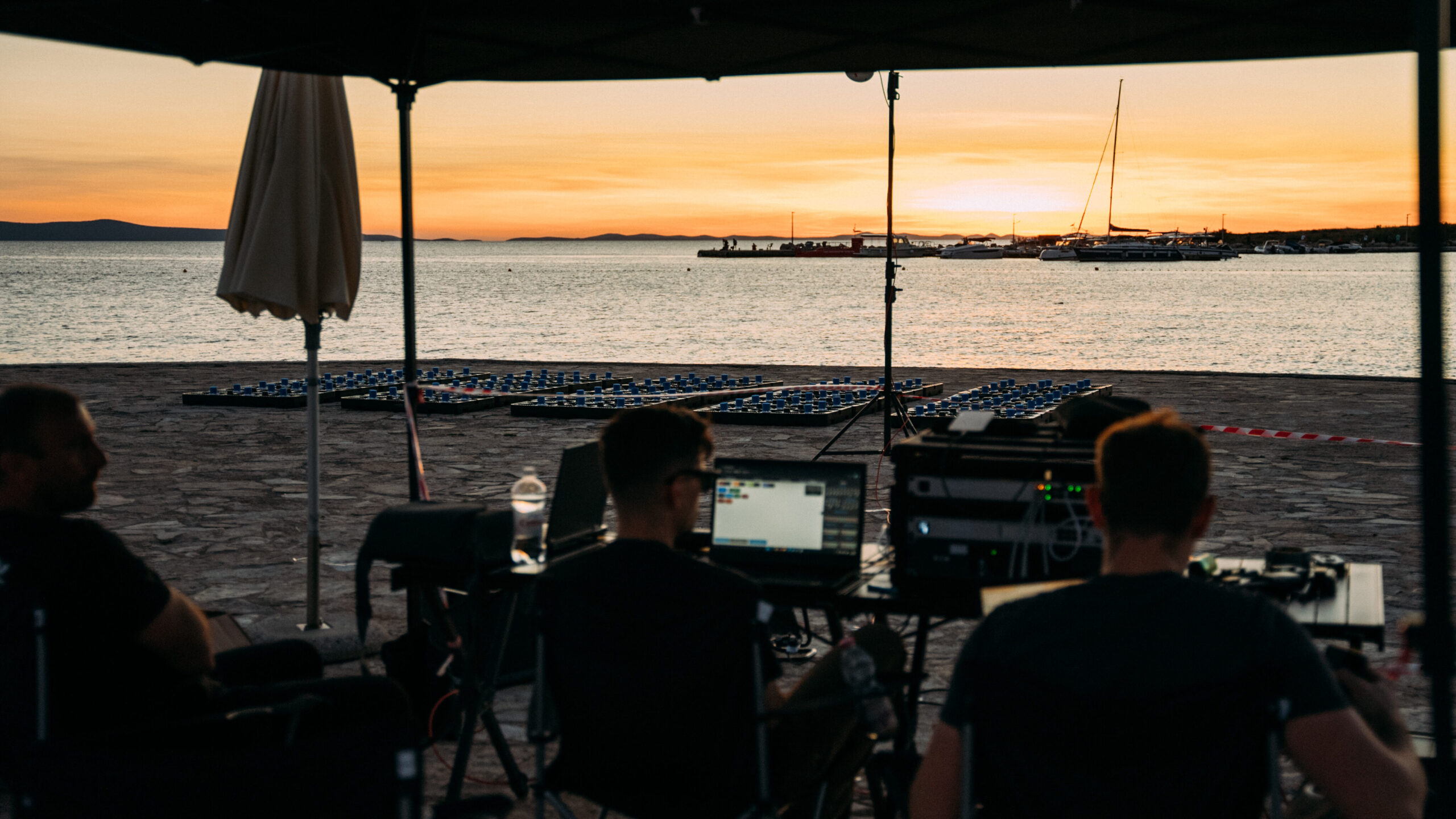
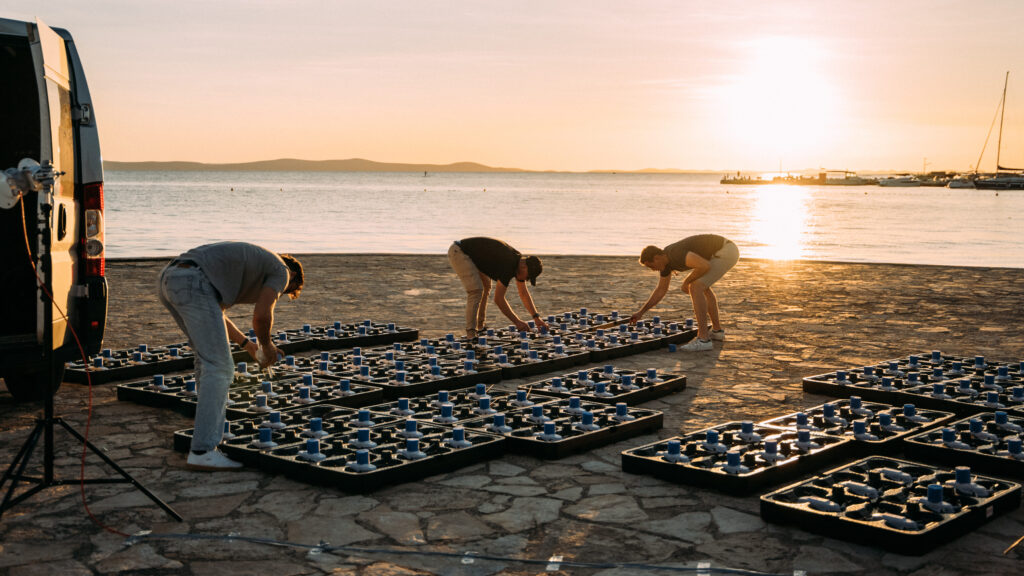
On show day, we typically arrive at least 4 hours before the performance.
One of the most important parts is antenna placement. Because we use unidirectional antennas with a 50–60° beam angle, we need to be 100% sure the whole flight area has strong coverage.
8) Checklists and final prep
When equipment and drones are positioned, we run a detailed checklist with:
- calibration and positioning checks,
- communication checks,
- GPS/RTK status,
- battery and system health and
- redundancy readiness.
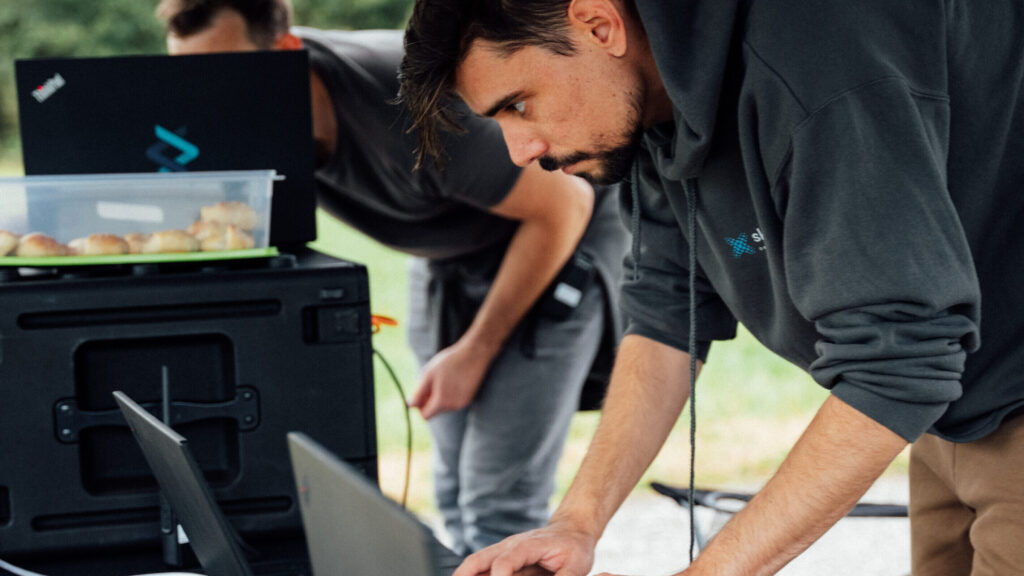
If everything passes, we upload the choreography through the GCS, make any minor adjustments (if needed), and prepare for launch.
9) Countdown
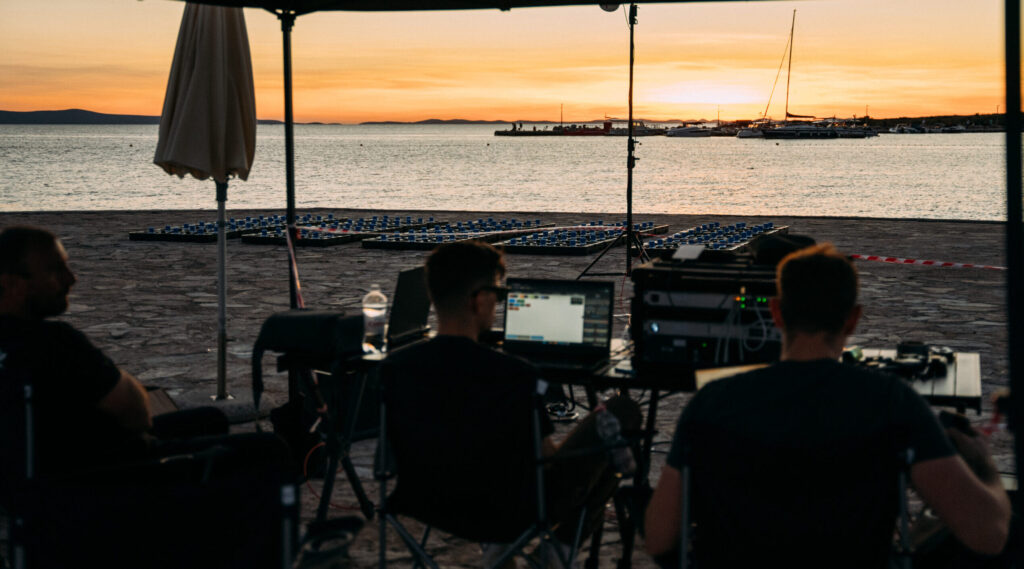
Then we start the countdown.
The pilot monitors telemetry and logs continuously, while the team stays in active communication — tracking system status and keeps the operation safe and stable.
10) The wows and cheers
And then the first shape forms… and you feel the crowd react. That split-second pause, then the first “wow,” phones coming out, kids pointing, people smiling. Lot of work that comes to this. Priceless!